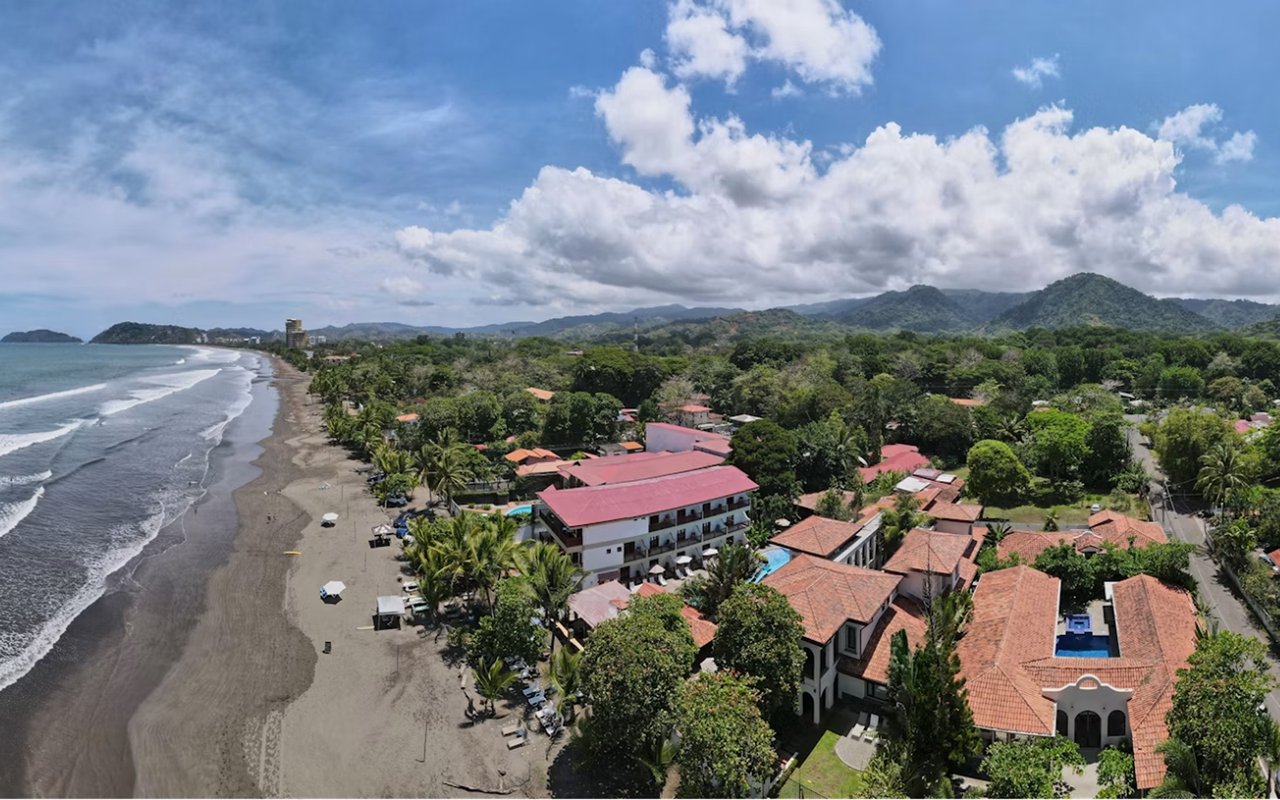
Ask a Costa Rica closing attorney what usually slows a beachfront deal down, and the answer is rarely the price. It's the second search. Along most of the Pacific and Caribbean coast, a lawyer working a coastal purchase has to verify two separate things: the land itself, and the concession contract that governs how it can be used, for how long, and by whom. Inside Los Sueños, on the Central Pacific coast near Playa Herradura, that second search doesn't exist. The property is titled, full stop. Understanding why matters more than the fact itself, because it changes what your attorney actually checks before you sign, and it draws a hard line around what titled ownership does and doesn't include once you're a homeowner.
The search that applies almost everywhere else
Costa Rica's coastline is governed by the 1977 Maritime Terrestrial Zone Law, which treats the first 200 meters inland from the high tide line as a matter of national interest rather than private property. That strip splits into two bands. The first 50 meters are public land outright, off limits to any private claim. The next 150 meters, the restricted zone, can be developed, but only through a concession, essentially a long-term lease granted by the local municipality rather than a deed recorded in the buyer's name.
Concessions typically run 5 to 20 years and are renewable, though renewal isn't automatic. Foreign buyers who haven't held legal residency in Costa Rica for at least five years can't hold a concession outright. They can participate through a Costa Rican corporation, but the corporation has to be majority Costa Rican owned, which caps the foreign stake at 49 percent. And the annual carrying cost isn't a property tax at all. It's a fee set at roughly 2.5 percent of the property's assessed value, paid to the municipality that holds the underlying land.
None of that makes concession property a bad investment. Buyers close on concession land across Guanacaste and the Pacific coast every month, and renewals are common when the terms have been honored. But it does mean the diligence checklist has an extra layer: confirming who issued the concession, when it expires, whether the municipality's coastal zoning plan is current, and whether the corporate structure holding it is clean.
An accident of timing, not a marketing claim
Los Sueños skips that layer because of when its land was recorded, not because of anything the resort negotiated. The 1977 law wasn't applied retroactively. Parcels that were already registered in the Public Registry with fee-simple title before the law took effect kept that title. Those parcels are genuinely rare along the Costa Rican coast, and by most legal accounts only a small fraction of the country's beachfront, generally cited around 5 percent, falls into this category, almost always tracing back to colonial-era or pre-1977 registrations.
Los Sueños's residential footprint is one of those parcels. The resort's own buyer materials describe the land as sitting outside the 50-meter public zone setback and grandfathered with fee-simple title at the moment the Maritime Law took effect, which is why condominiums, villas, and homesites across the development, from Del Mar and Colina to Faro Escondido and the newer Playavista Estates release, are conveyed as titled property rather than concession rights. That distinction is worth reading closely, because it's a legal fact about the land's registration history, not a feature the resort's marketing invented.
Here's how the two ownership types compare in practice:
| Concession Property (most of Costa Rica's coast) | Titled Property (Los Sueños) | |
|---|---|---|
| What you hold | A government lease on the restricted zone | Fee-simple title recorded in the Public Registry |
| Term | 5 to 20 years, renewable | No expiration |
| Foreign ownership | Requires 5 years of residency, or minority stake in a majority Costa Rican corporation | No residency requirement to hold title |
| Annual carrying cost | Municipal fee, roughly 2.5% of assessed value | Standard property tax |
| Renewal risk | Common to renew, but not guaranteed | Not applicable |
| What your attorney checks | Concession grant, compliance history, municipal zoning plan | Chain of title, liens, corporate structure if applicable |
What actually changes at your closing table
The practical effect is that a Los Sueños purchase removes an entire category of questions from the file. Your attorney isn't tracking a concession's expiration date or verifying that the municipality's Plan Regulador still covers the parcel. There's no five-year residency clock standing between a foreign buyer and full legal ownership. The annual bill is a property tax assessment, not a use fee calculated against the land's value.
That doesn't mean the file gets thin. A titled purchase still requires a proper registry search to confirm the seller's chain of ownership, a check for liens or encumbrances, and, if the seller holds the property through a corporation, a review of that entity's standing and any debts attached to it. Titled land answers the question of whether you can own the property outright. It doesn't answer every other question a buyer should ask.
The part the deed doesn't cover
This is where buyers sometimes assume more than the title actually promises. Owning a titled unit inside Los Sueños doesn't come with an automatic claim on the resort's most sought-after amenities, because those amenities are managed separately from the land itself.
The marina is the clearest example. Los Sueños Marina, the country's only government-sanctioned marina and a hub for the region's sportfishing tournaments, holds 200 wet slips and 166 dry storage spaces, and it runs at very high occupancy nearly year round. Buyers who purchase through the resort's own sales channel do get priority when requesting an annual slip, ahead of non-owners. But priority means moving toward the front of a line, not receiving a guaranteed slip. Availability still depends on vessel size and what's open at the time, and a waiting period is a normal part of the process even for homeowners.
The same logic extends to the resort's beach club and golf access, both of which are structured as amenities of the master homeowners association rather than rights attached to any individual deed. They come with the territory of buying inside Los Sueños, but they're governed by association rules and capacity limits, not by the title search that got you to closing.
The honest way to think about it: titled ownership and amenity access are two different due diligence tracks. One is a legal question your attorney answers by reading the registry. The other is an operational question you answer by asking the marina office or the HOA directly what current slip availability and wait times actually look like before you assume a purchase includes one.
A short list of questions worth asking directly
Does every property inside Los Sueños carry titled ownership? The resort's residential communities are described as titled rather than concession-based, but the specific folio real for any parcel should still be confirmed by your attorney before you rely on that as fact for a particular unit.
If the land is titled, do I still need a real estate attorney? Yes. Titled land removes the concession-specific checks, not the standard ones. Chain of title, liens, and corporate structure still need verification.
Does owning titled property guarantee a marina slip or beach club access? No. Those run on separate homeowner-priority systems with their own capacity limits, independent of what the deed says.
Understanding which questions your title answers, and which ones it doesn't, is the difference between a smooth closing and a surprise six months in. If you're weighing a purchase inside Los Sueños or comparing it against concession property elsewhere on the Central Pacific coast, Christie's International Real Estate Costa Rica can walk the registry work, the corporate structure, and the amenity terms side by side, so you know exactly what you're buying and what you still need to ask for. Schedule a private viewing to see the distinction in person.